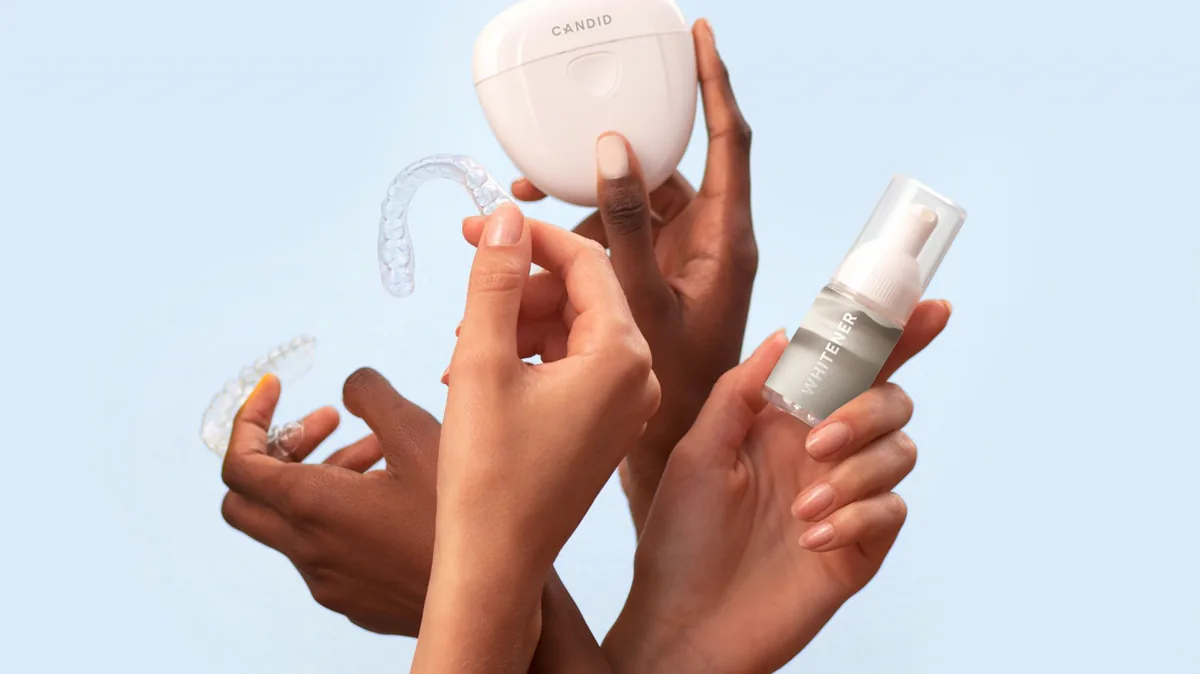
Whitening can make natural teeth look lighter, but the result and suitability vary. An examination comes first because decay, gum problems, sensitivity, existing restorations, and the cause of discolouration can change the safest approach.
Why teeth change colour
Tea, coffee, tobacco, and some foods can leave surface stains. Teeth may also darken with age, after trauma, or because of changes inside a tooth. Different causes respond differently, so whitening is not the answer to every colour concern.
What whitening can and cannot change
Whitening products act on natural tooth structure. They do not lighten fillings, crowns, veneers, or dentures, which can leave a colour mismatch. Scaling and polishing may remove some external deposits but does not bleach the underlying tooth colour.
Why professional assessment matters
A dentist can check whether your mouth is healthy enough for whitening, discuss realistic expectations, protect the gums during treatment, and explain possible temporary sensitivity or irritation. The product, concentration, application method, and treatment time should be selected for the individual.
Be cautious with unverified products
Online or salon products may have unclear ingredients, instructions, or oversight. Abrasive products can remove surface stain but may also wear tooth structure if misused. Ask a dentist before starting treatment, particularly if you have pain, sensitive teeth, gum problems, or dental restorations.
Maintaining a lighter appearance
Whitening is not permanent. Limiting tobacco and frequent dark-coloured drinks, cleaning effectively, and attending advised dental visits can help manage new staining. The duration of a result varies with habits and the type of discolouration.
See our teeth-whitening service and request a suitability assessment before deciding on treatment.
About this dental information
Published by: Louis Dental Surgery
Last updated:
This article is general education and cannot diagnose your condition or replace an examination. Treatment suitability, benefits, risks, alternatives, and costs depend on an individual assessment. See our dental content and editorial policy.