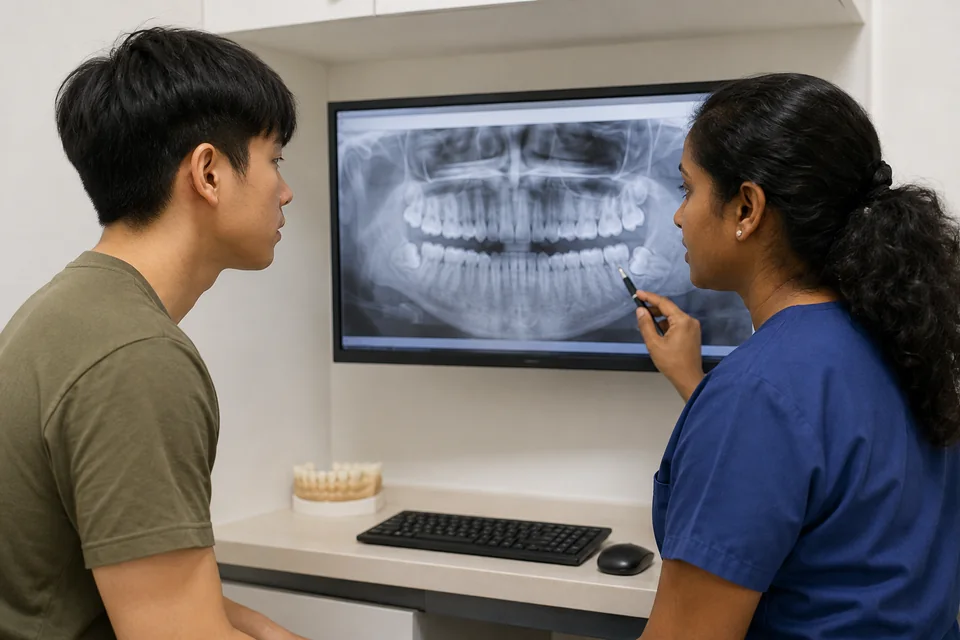
Wisdom teeth, or third molars, usually appear in the late teens or early twenties. Some come through without trouble, while others become trapped in the jaw or only partly emerge. If you are considering wisdom tooth removal in Seremban, it helps to know that removal is not automatic: the decision follows an individual assessment of your symptoms, examination findings, and X-rays.
When removal may be advised
A dentist may suggest removing a wisdom tooth when there is repeated pain or swelling, infection of the gum over the tooth, decay that cannot reasonably be restored, gum disease around the tooth, a cyst, or damage to the neighbouring tooth. A wisdom tooth that is healthy, fully through, and causing no problems is often simply monitored at routine check-ups instead.
What the assessment involves
The dentist will ask about your symptoms and medical history, then examine the area. An X-ray is commonly recommended to show the position of the tooth, its roots, and nearby structures such as nerves; our page on intra-oral dental X-rays explains when imaging is considered appropriate. At Louis Dental Surgery in Seremban, the findings, options, and material risks are discussed before any decision is made.
What the procedure can involve
Wisdom tooth surgery is usually carried out under local anaesthetic, so the area is numb. Depending on the position of the tooth, the dentist may need to lift the gum, remove a small amount of bone, or divide the tooth into pieces before taking it out, and dissolvable stitches are sometimes placed. Straightforward cases may take only a short time, while more difficult impactions take longer and are occasionally referred to a specialist.
Recovery and aftercare
Some pain, swelling, and jaw stiffness are common for a few days and usually improve gradually. You will normally be advised to eat soft foods, keep the area clean without disturbing the blood clot, and avoid smoking, alcohol, and very hot drinks at first. How much time you need away from work or study varies with the difficulty of the removal and your own healing.
Possible risks to discuss
As with any surgery, complications can occur even when care is taken. These include dry socket, infection, prolonged bleeding, and temporary or, less commonly, persistent altered sensation in the lip, chin, or tongue. The likelihood depends on the position of the tooth and individual factors, so raise your questions before consenting.
Warning signs that need prompt attention
Contact a dentist promptly if bleeding does not stop, if pain or swelling becomes severe or keeps worsening, or if you develop a fever, a bad taste, or feel generally unwell. Swelling that affects breathing or swallowing needs urgent medical care. For urgent dental concerns in Seremban, our emergency dental assessment page explains how to reach us.
If a wisdom tooth is troubling you, read about our wisdom tooth surgery in Seremban or request an appointment for an individual assessment.
About this dental information
Published by: Louis Dental Surgery
Last updated:
This article is general education and cannot diagnose your condition or replace an examination. Treatment suitability, benefits, risks, alternatives, and costs depend on an individual assessment. See our dental content and editorial policy.